
WHEN THE ROOM NEEDS TO SAY YES
Getting to yes requires more than just a good idea.
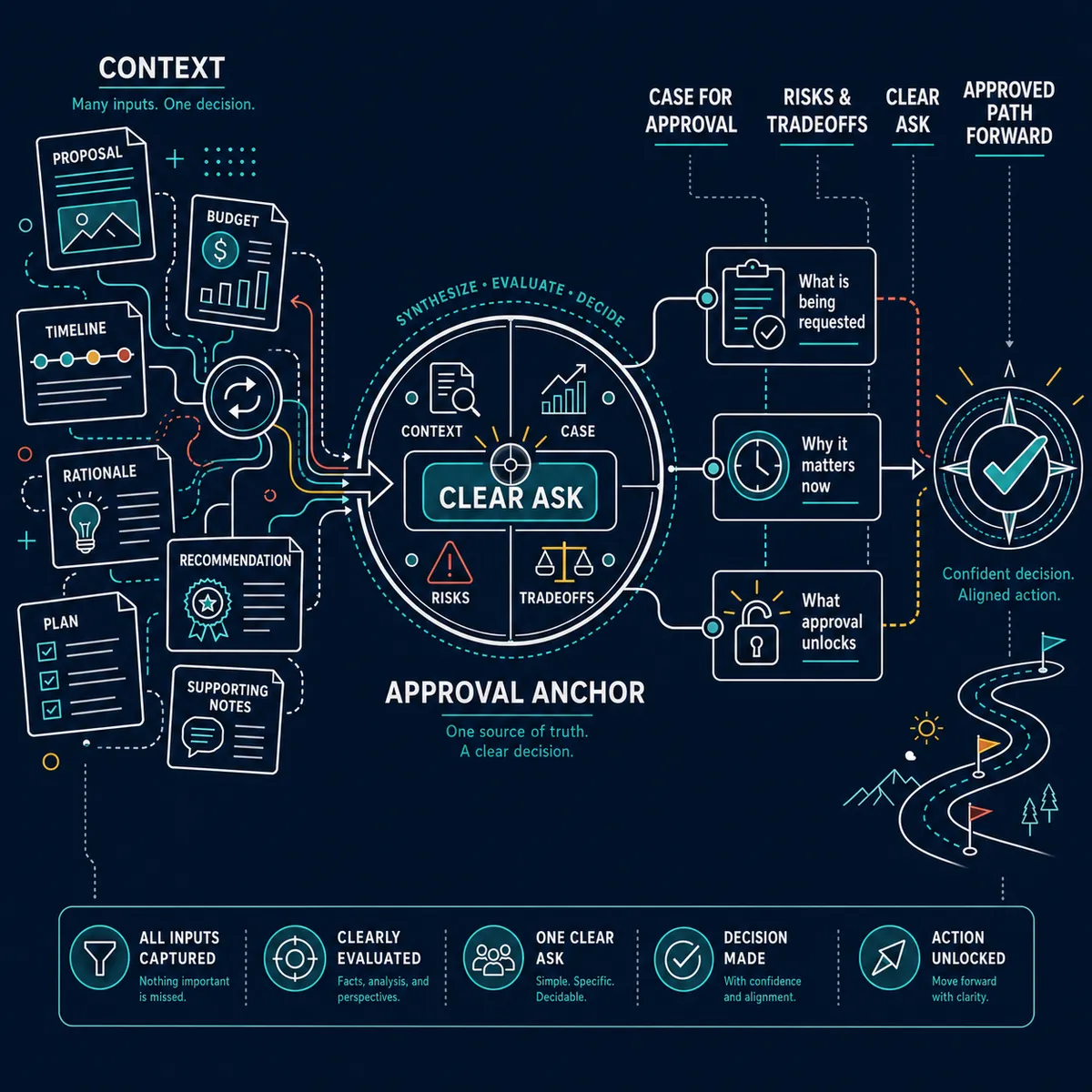
You may have the proposal, plan, recommendation, budget, timeline, and rationale. But if the room cannot quickly see what is being requested, why it matters, what the risks are, and what happens after approval, the yes can stall.
An approval visual anchor helps leaders, boards, clients, funders, or stakeholders understand the ask, trust the logic, and move forward with confidence.
The ask may be reasonable.
That doesn't mean the room is ready to approve it.
You may be preparing for a board meeting, executive review, funding request, budget approval, project authorization, proposal presentation, client sign-off, grant review, policy approval, roadmap approval, or investment conversation.
You may already have the material. The proposal.
The business case.
The recommendation.
The cost.
The timeline.
The rationale.
The implementation plan.
The supporting details.
And still, the approval can get stuck.
Not because the idea is weak.
Because the ask is not clear enough to take action on.
Someone wants more context.
Someone jumps straight to cost.
Someone focuses on risk.
Someone asks what happens if you do nothing.
Someone gets lost in the details.
Someone agrees in theory but hesitates when it is time to authorize the move.
That is where an approval visual anchor helps.
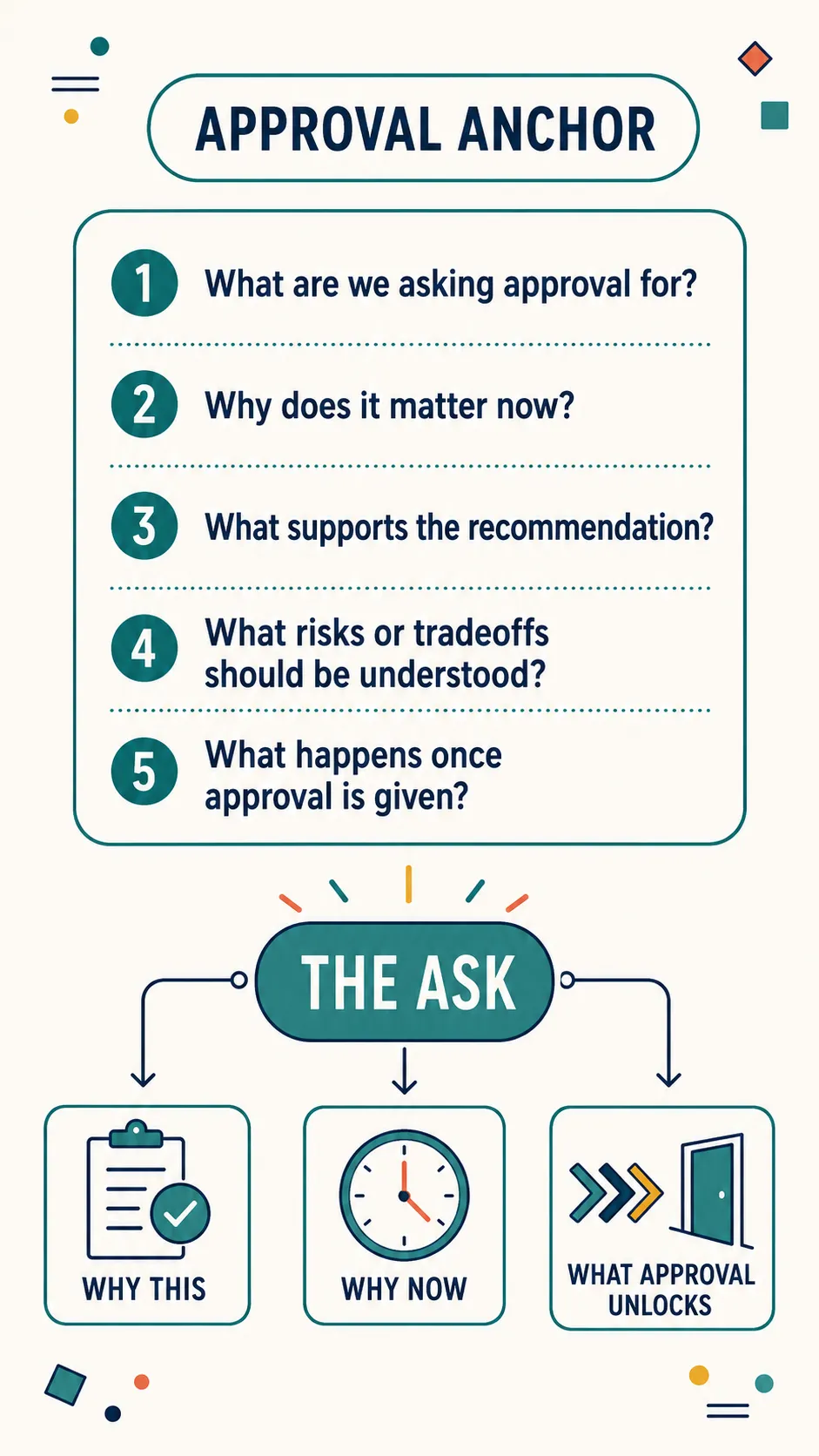
It gives the room a clear view of what is being requested, why it matters, what the tradeoffs are, what approval enables, and what happens next.
Because approval is not only a decision.
It is permission to move.
And people rarely give that permission confidently when the ask, rationale, risk, and next steps are scattered across a deck, memo, or long report.
I LEARNED THIS THE HARD WAY
I used to think getting approval came down to making the case.
For a long time, when I needed approval, I focused on building a strong case.
I gathered the background.
I explained the need.
I showed the options.
I listed the risks.
I included the numbers.
I prepared the recommendation.
I made sure the plan was defensible.
And still, the room could wobble.
Someone would ask a basic question I thought I had already answered.
Someone would focus on one cost line and lose the purpose of the investment.
Someone would want to revisit an earlier conversation.
Someone would say, “I support this,” but not quite give the yes.
Someone would approve it with so many caveats that the path forward got muddy before it even started.
That is so frustrating.
But it is also useful information.
A room hesitates when the ask is not clean enough, the stakes are not clear enough, or the path after approval feels too fuzzy.
Eventually, I realized the problem:
I had prepared the business case.
But I had not prepared for the approval moment.
And that moment needs its own architecture.
THE SHIFT
The visual anchor changed how the room understood the ask.
Once I started using visual anchors for approval conversations, the room had something better to work from.
The ask became visible.
Not implied.
Not buried.
Not floating somewhere near the end of the deck.
Visible.
People could see what was being requested.
They could understand why now mattered.
They could connect the request to the larger goal.
They could see what had been considered.
They could weigh the risks without derailing the conversation.
They could understand what approval would make possible.
That changed the energy in the room.
When questions came up, we could refer back to the visual.
Is this a question about the need? The ask? The cost? The risk? The timing? The path after approval?
That made the conversation cleaner. Not always easier. Cleaner.
And in approval conversations, clean matters.
The question is not,
"Have we explained the proposal?"
The better question is:
"Can the room see exactly what they are being asked to approve and why it is safe enough to move forward?"
WHAT A VISUAL ANCHOR CAN MAKE EASIER
A strong approval visual helps the room move from consideration to commitment.
Approval conversations get messy because people are not only evaluating the idea. They are evaluating trust.
Trust in the logic. Trust in the numbers. Trust in the timing. Trust in the people who will execute. Trust in the risks being named honestly. Trust in what happens after they say yes.
A strong approval visual anchor can help the room:
See the approval request quickly
Understand why the request matters now
Connect the ask to strategy, impact, performance, or mission
See the rationale without wading through every detail
Understand key risks, tradeoffs, and assumptions
Recognize what has already been considered
Clarify what approval does and does not mean
Separate approval from implementation detail
Leave with a clear next step, owner, and path forward
This is not about dressing up a proposal.
It is about making the yes easier to understand, easier to defend, and easier to act on.
WHAT THIS CAN BECOME
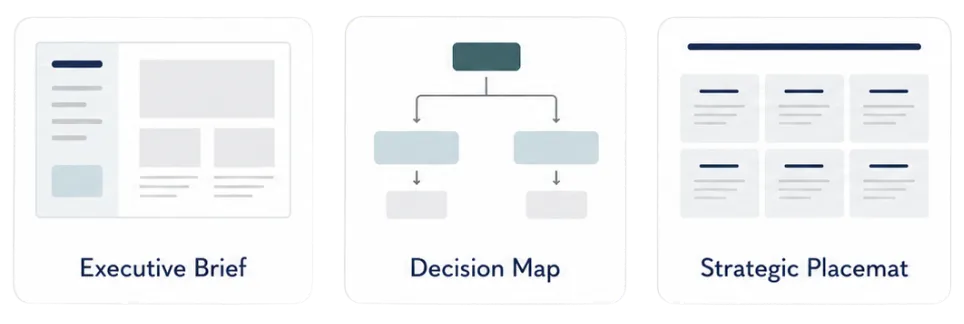
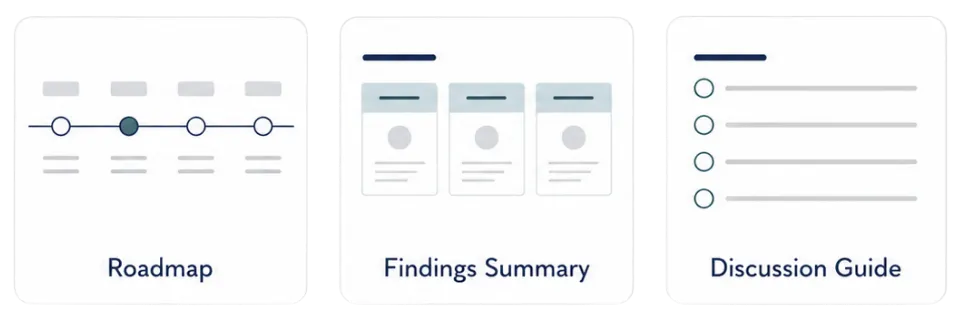
The format follows the job of the visual.
Once we understand your audience, purpose, source material, and desired outcome, we shape the visual structure around the conversation is needs to support.
You do not need to force your story into a template.
We build the visual around what the room needs to see, understand, and do.
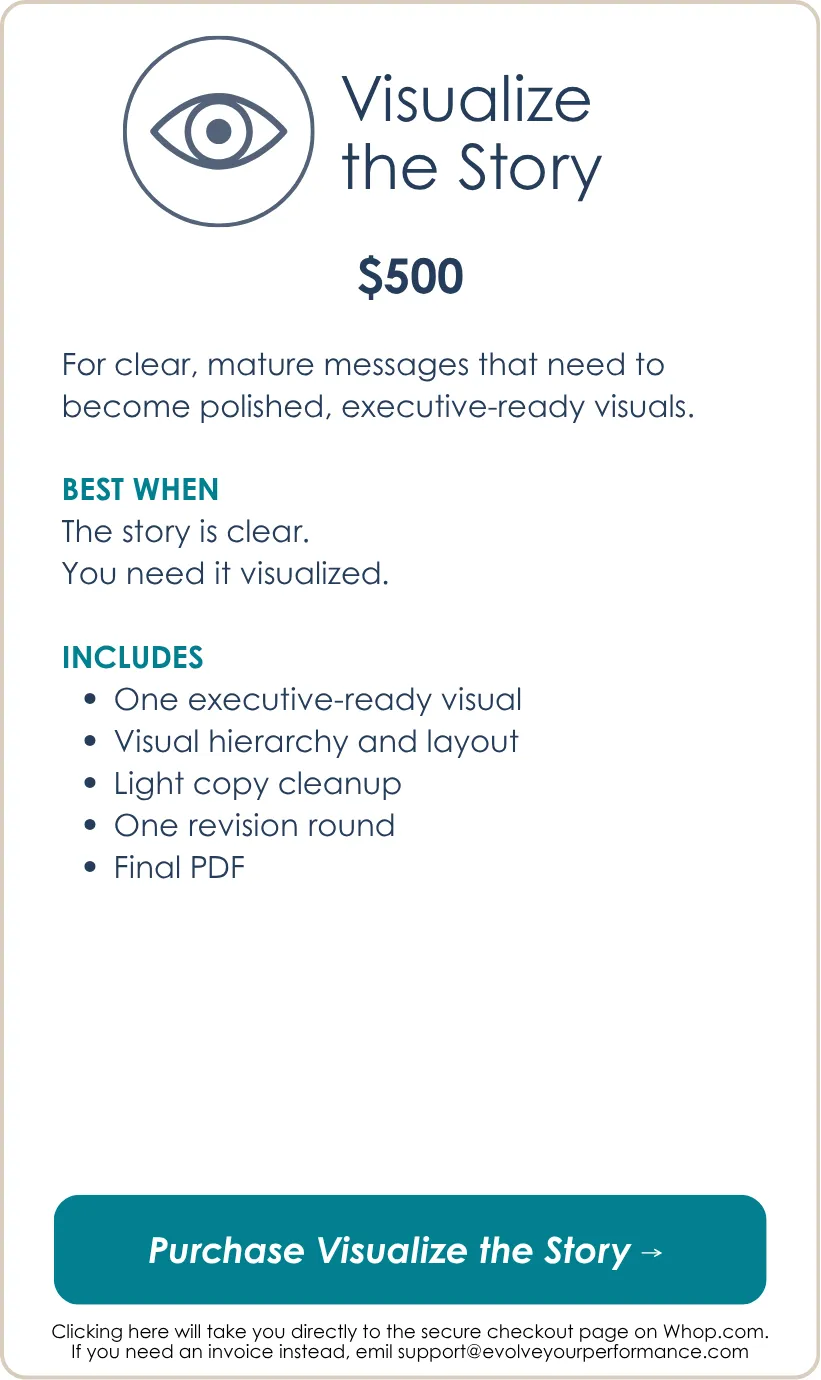
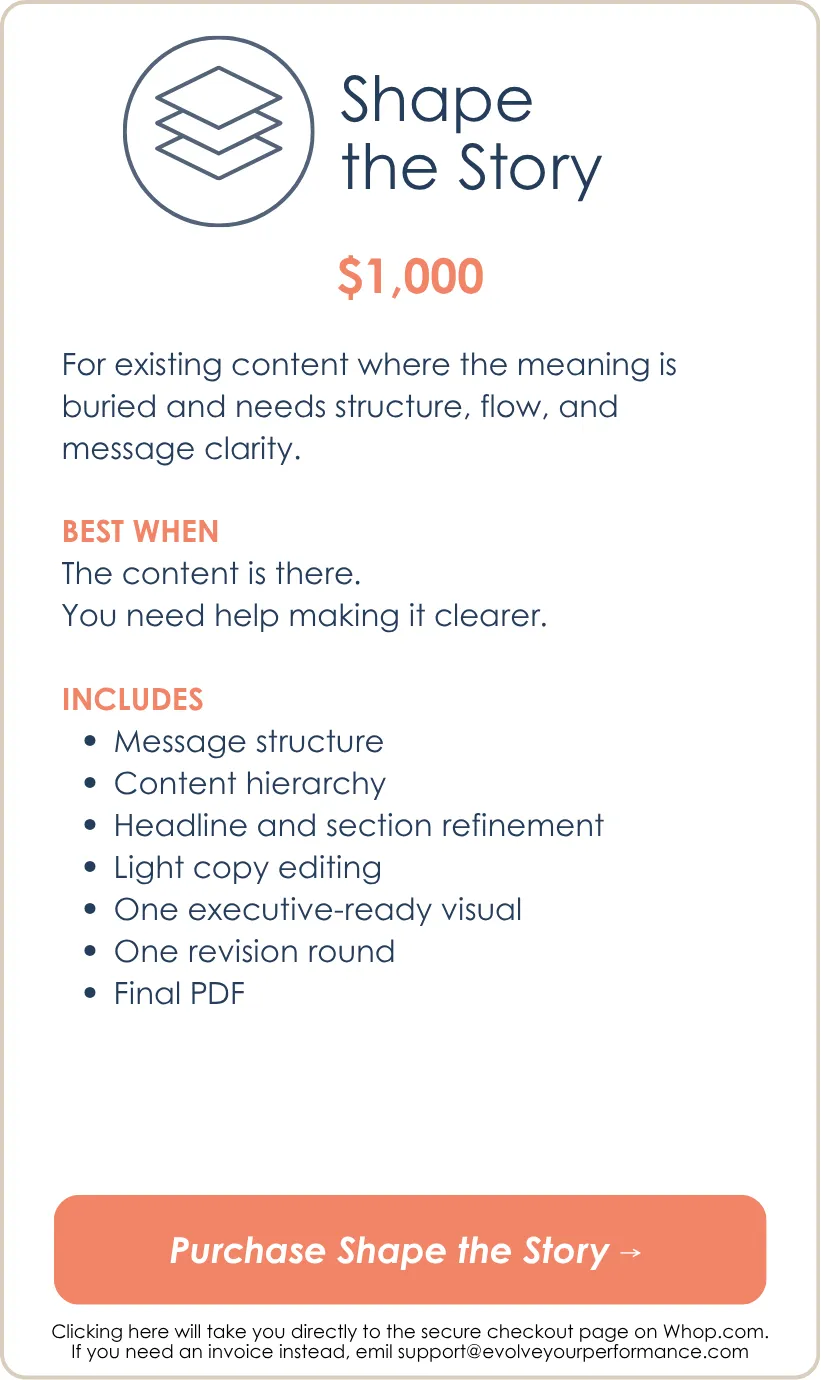
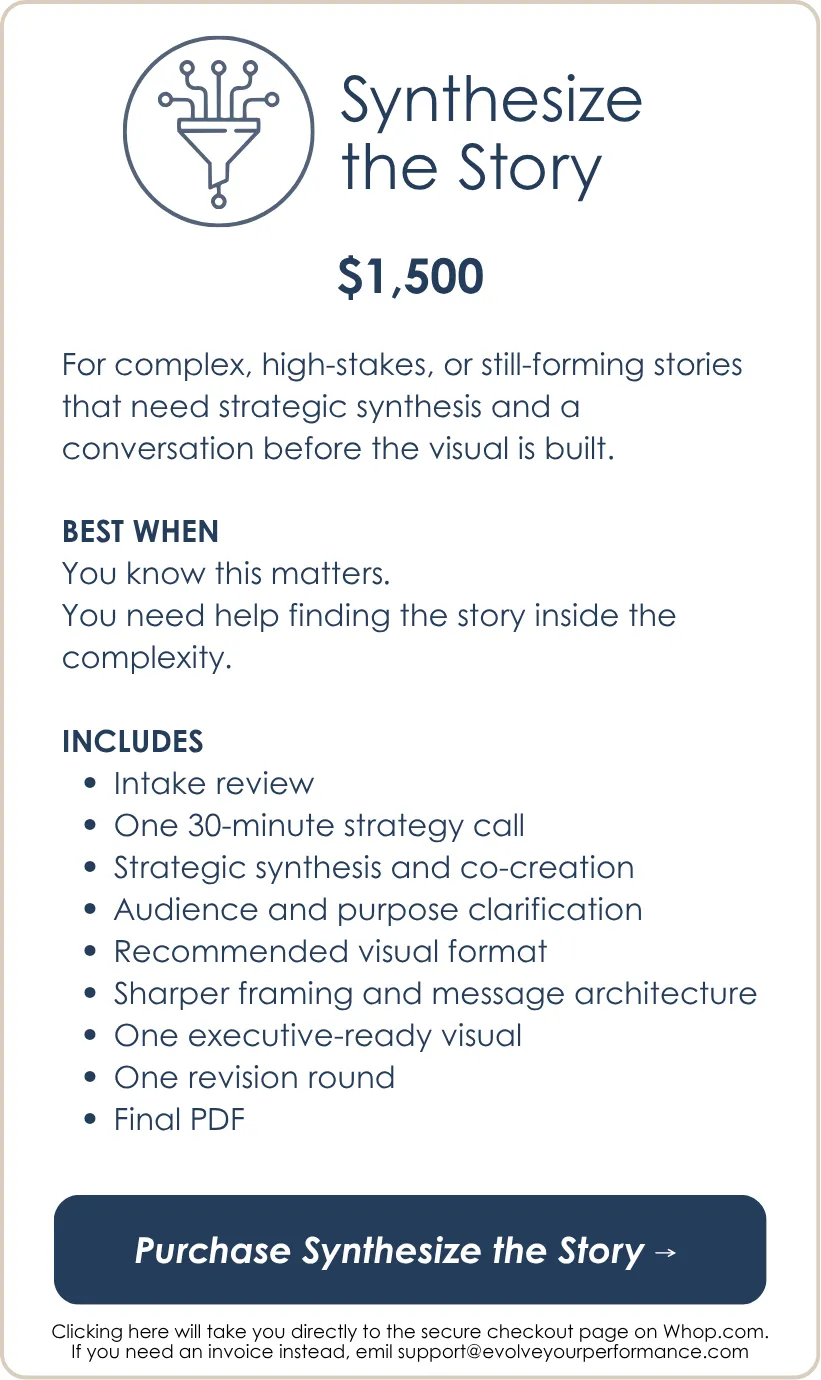
CHOOSE YOUR LEVEL OF SUPPORT
Choose based on how clear the story is right now.
Pick the level of support that matches where you are in the process.
WHAT HAPPENS NEXT
The process is simple.
NOTE: Work begins after payment and completed intake are received.

A few questions before you choose
What if I already have a proposal or business case?
That helps.
A proposal explains the request.
An approval visual anchor helps the room see the ask, understand the rationale, weigh the risk, and know what happens after approval.
If the proposal is already clear and you need it visualized, choose Visualize the Story. If the case needs stronger structure or cleaner hierarchy, choose Shape the Story.
What if this is for a board?
This is a strong fit.
Boards usually do not need every operational detail in the room. They need the right view of the approval request: context, rationale, risk, options or tradeoffs, recommendation, and what approval authorizes.
A board approval visual helps them see the whole ask without getting buried in the packet.
What if the approval involves funding or budget?
Then the visual needs to make the value and tradeoffs clear.
That may include what the funding enables, what happens if it is delayed, what risks are being managed, what assumptions are built into the request, and what decision rights are being requested.
What if I need approval but not a formal decision?
Approval is still a decision. It may be framed as authorization, sign-off, endorsement, funding, permission, support, or a go-ahead.
The visual should make clear what kind of yes is needed.
What if the room agrees with the idea but hesitates on the yes?
That usually means the approval case needs clearer structure.
People may understand the idea, but still need more confidence in the timing, cost, risk, execution path, ownership, or implications.
The visual anchor can help separate those concerns so they can be addressed directly.
What if the approval is politically sensitive?
Sensitive approval requests need careful framing.
The intake form asks what language must stay exactly as written and what can be clarified. This matters for funding requests, public-facing decisions, policy changes, staffing issues, partnerships, vendor decisions, and reputationally sensitive moves.
For sensitive approvals, Synthesize the Story is usually the better fit because the framing matters as much as the design.
What if there are risks or tradeoffs?
There probably are.
A strong approval visual does not hide them.
It makes the most important risks, tradeoffs, assumptions, and guardrails visible enough for the room to trust that the request has been thought through.
What if I have too much information?
That is common.
The goal is not to fit everything onto one page.
The goal is to create the right view for the conversation.
Some details may belong in the visual. Others may belong in backup materials, an appendix, or the full report.
What if my content is messy?
Messy content is normal.
If the content exists but needs structure, choose Shape the Story.
If the story itself is still hard to frame, choose Synthesize the Story.
If the content is already clear, choose Visualize the Story.
What if I choose the wrong package?
The package is based on how much thinking support you need before the visual gets built.
If your request appears to be significantly outside the package you selected, we will flag that before the build begins and recommend the right adjustment.
The goal is to make sure the work is scoped correctly so the final visual is useful.
Is this just graphic design?
No.
The final artifact is visual, but the work is not just design.
It is message structure, sensemaking, visual hierarchy, and executive communication.
The goal is not just a better-looking page.
The goal is a clearer conversation.

Ready to make the ask easier to approve?
You do not need another approval conversation where the proposal is solid, but the ask gets buried under context, cost questions, side concerns, or implementation details.
If the approval matters, the room needs a visual anchor strong enough to show the ask, clarify the case, surface the risks, and make the path after yes easier to see.
Choose the level of support that fits where your approval story is now, and we will help turn the complexity into an executive-ready visual people can actually use.
Still thinking it through? Check out the How it Works page to learn more and download the free guide.
We make complexity visible.
We help people see the patterns.
We turn understanding into action.
That's executive storytelling.
An Evolve Your Performance offering.
© 2026 Evolve Your Performance, LLC
All rights reserved.